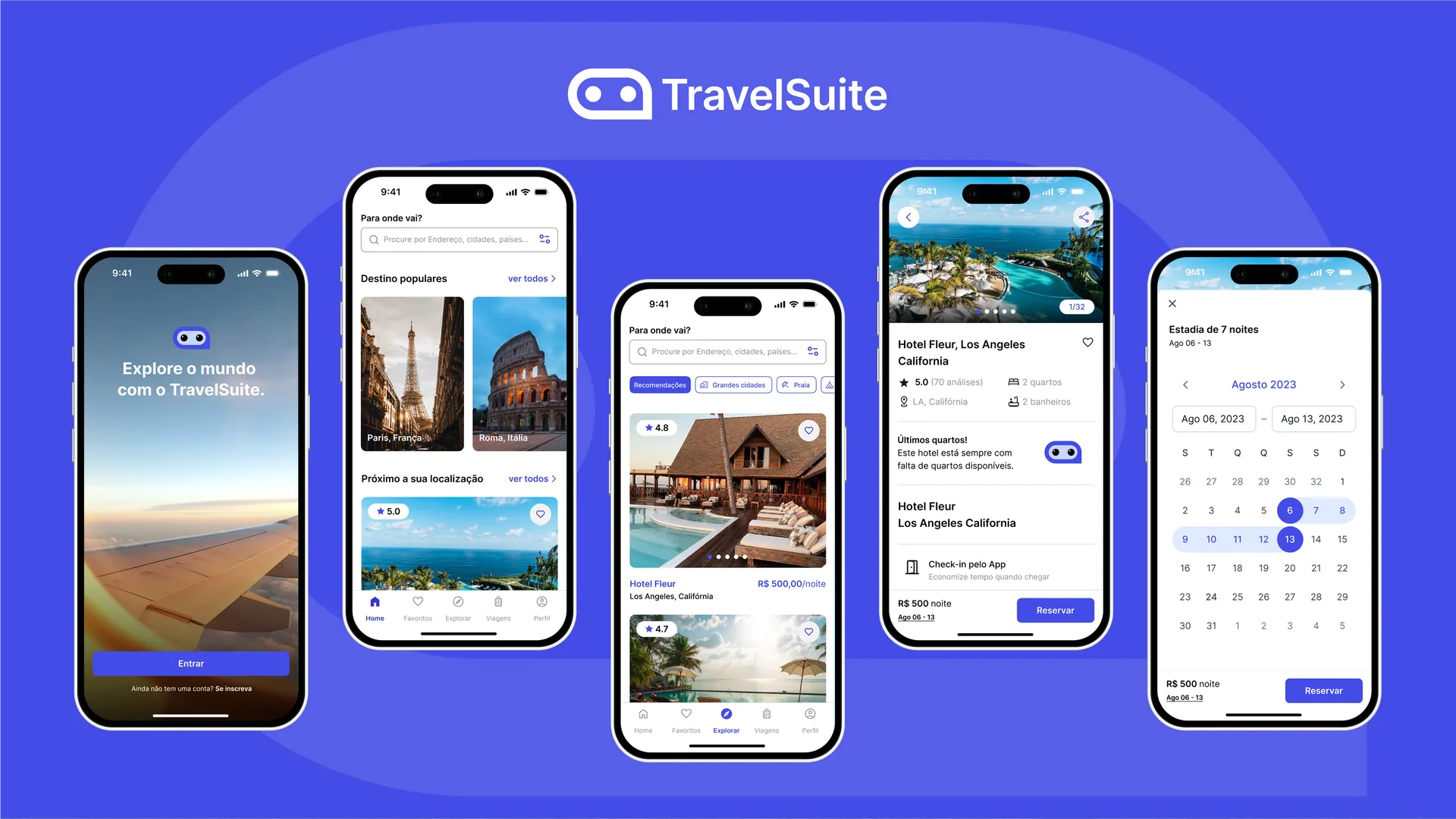
TravelSuite is a travel accommodation booking app that goes beyond simply reserving a place to stay. It will offer a complete experience, with a range of additional services during users' stays.
The problem
In the travel app landscape, the lack of integration and personalisation creates fragmented experiences, forcing users to juggle several platforms.
Goal
TravelSuite stands out by offering a holistic solution that covers bookings, personalised services and detailed information, meeting travellers' complex needs in a unique and convenient way.
Responsibilities
Research, wireframes, low- and high-fidelity prototypes, user testing, and the interface Style Guide, including colours, typography, buttons, components and more.

User research and personas
The user research I conducted was a qualitative study based on one-on-one interviews with potential users of the hotel booking app. I initially assumed users would care most about fast-booking features, but after the interviews I realised that personalised accommodation options and the ease of requesting services during the stay were just as important.
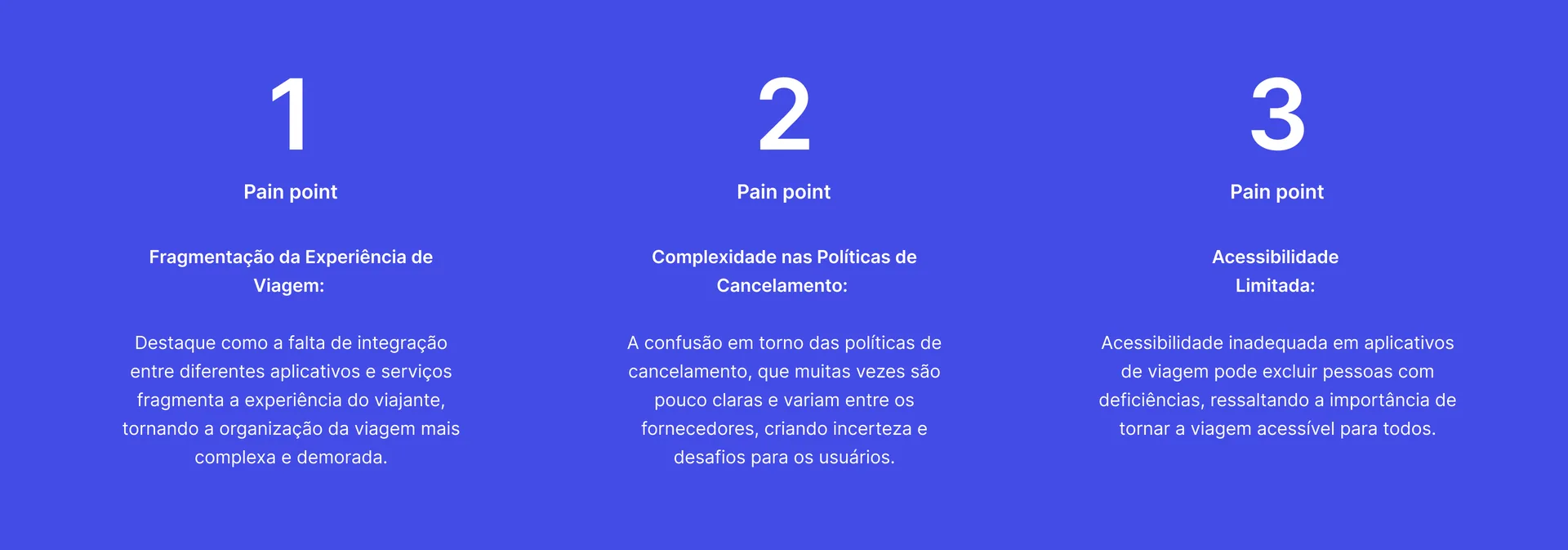
Pain points
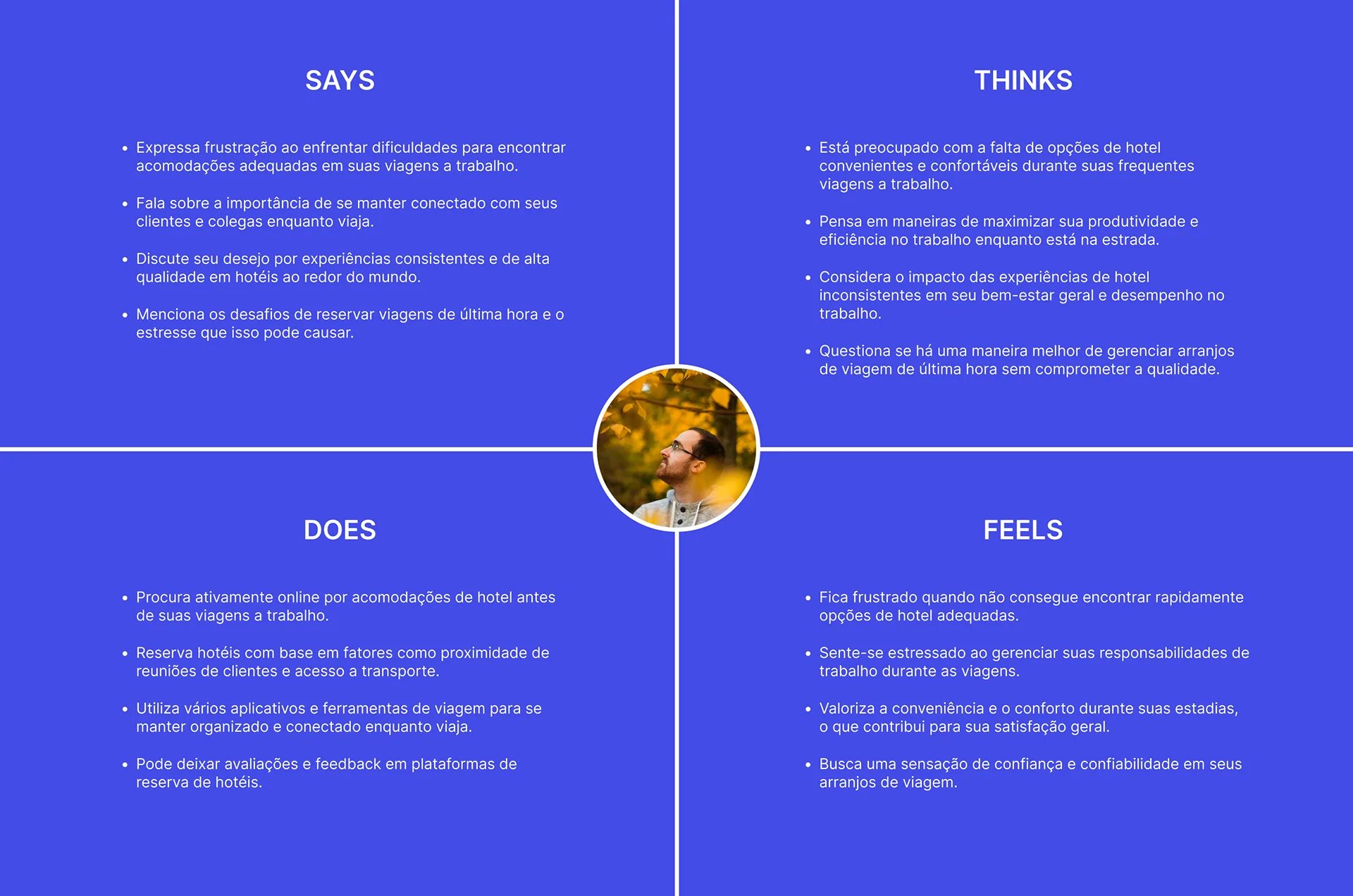
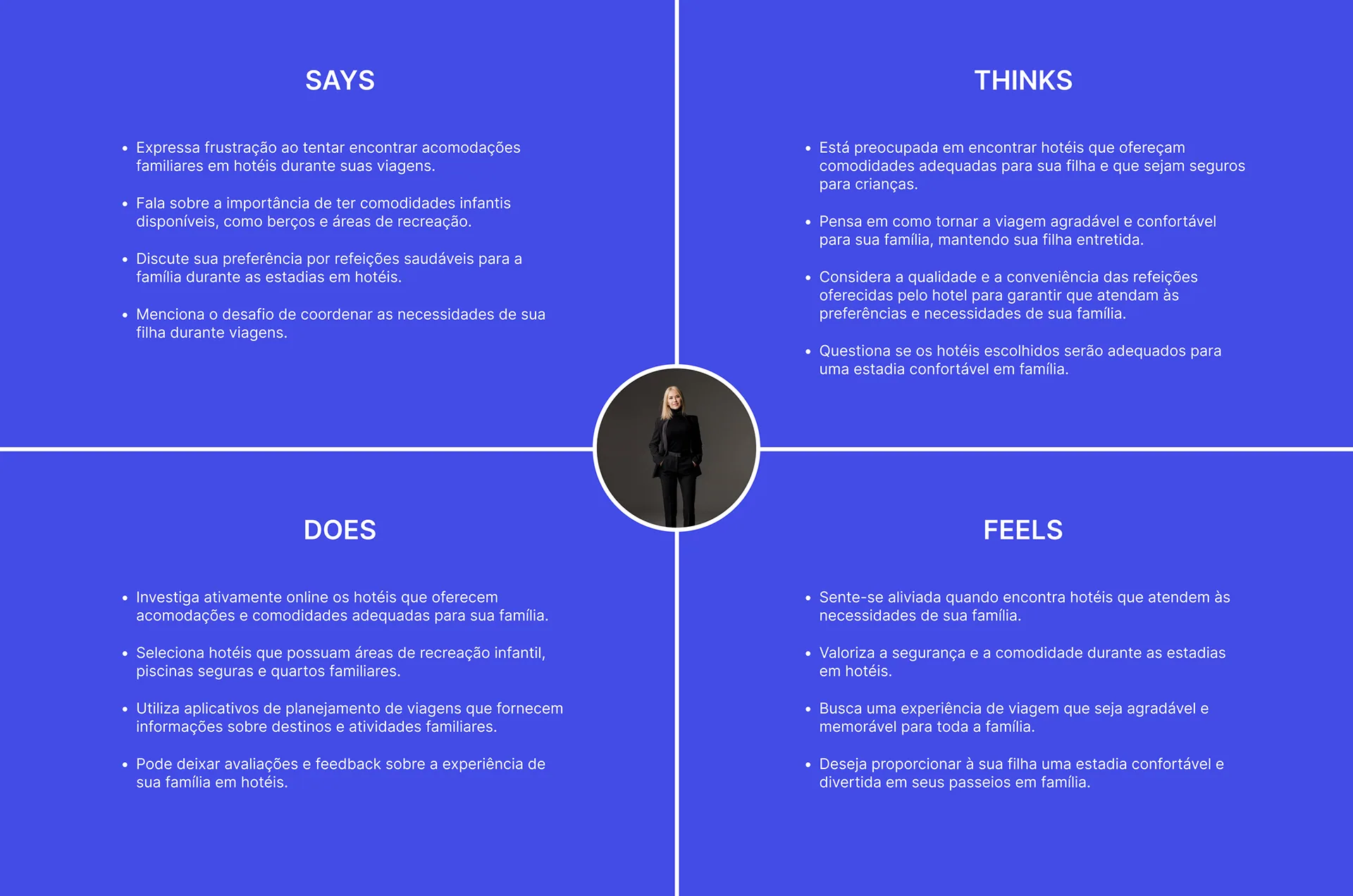
Empathy map
Based on the data collected in interviews and research, empathy maps were built for the personas.
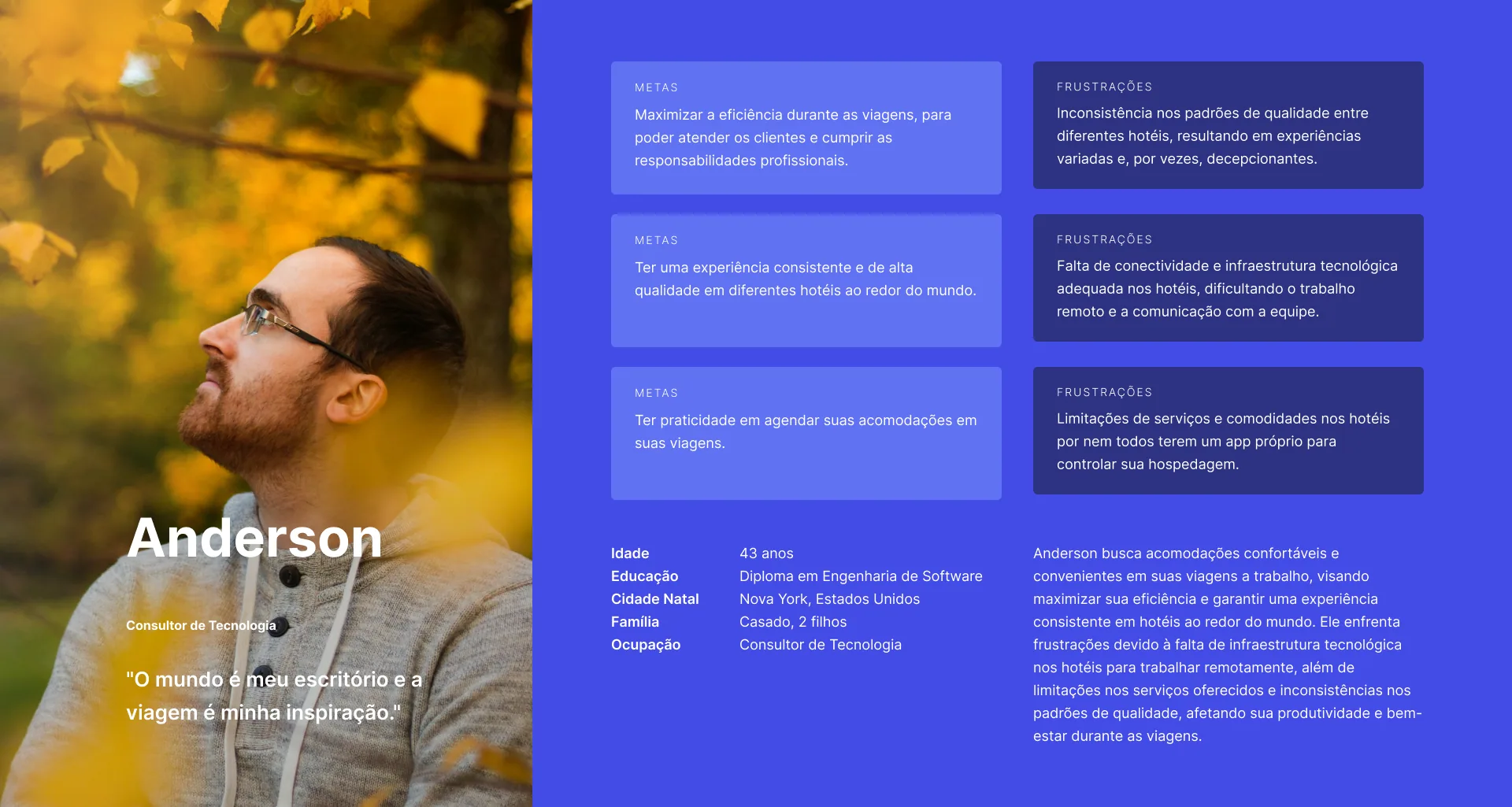
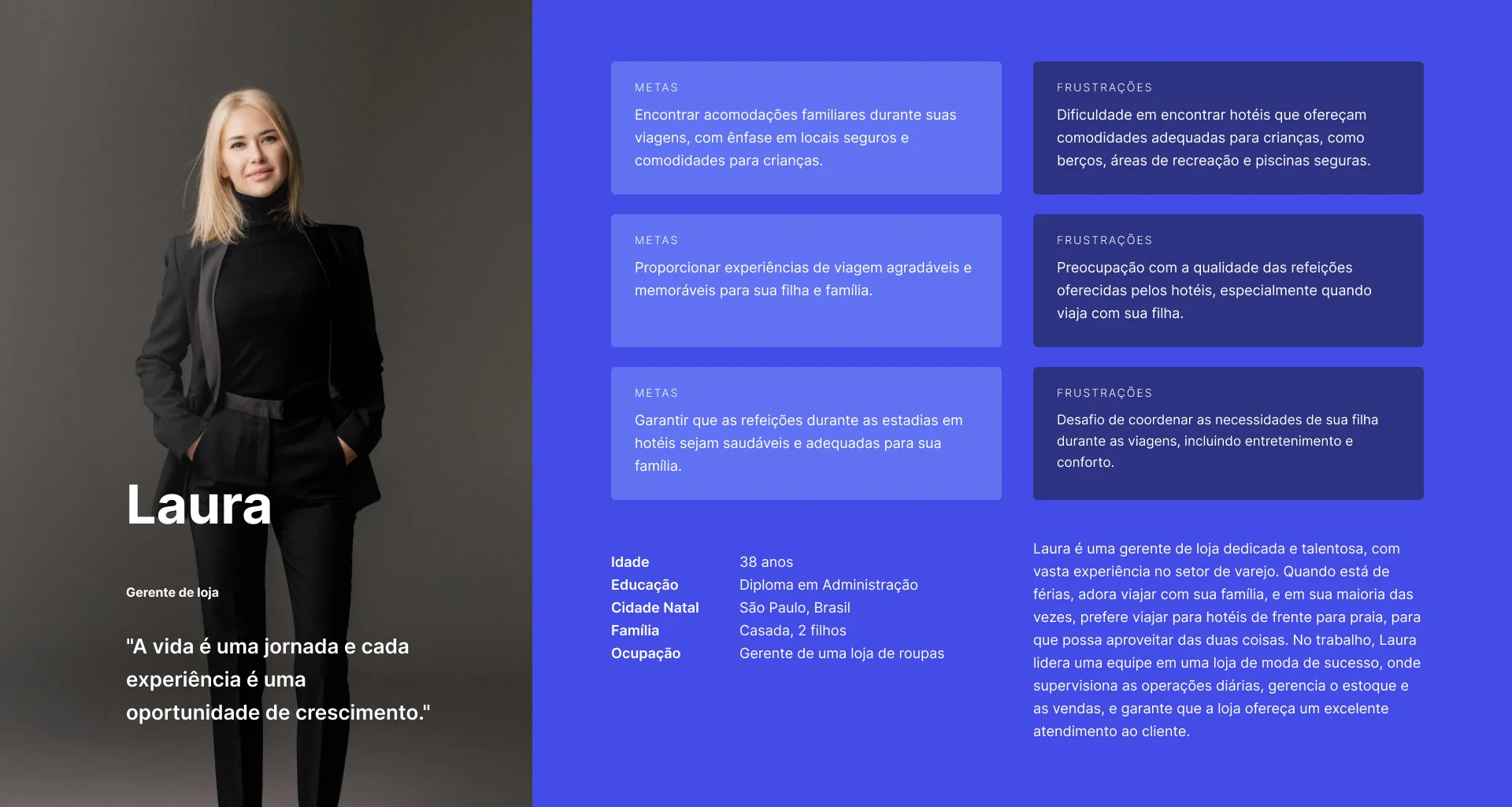
Personas
Persona 1 - Anderson
Persona 2 - Laura
User journey map
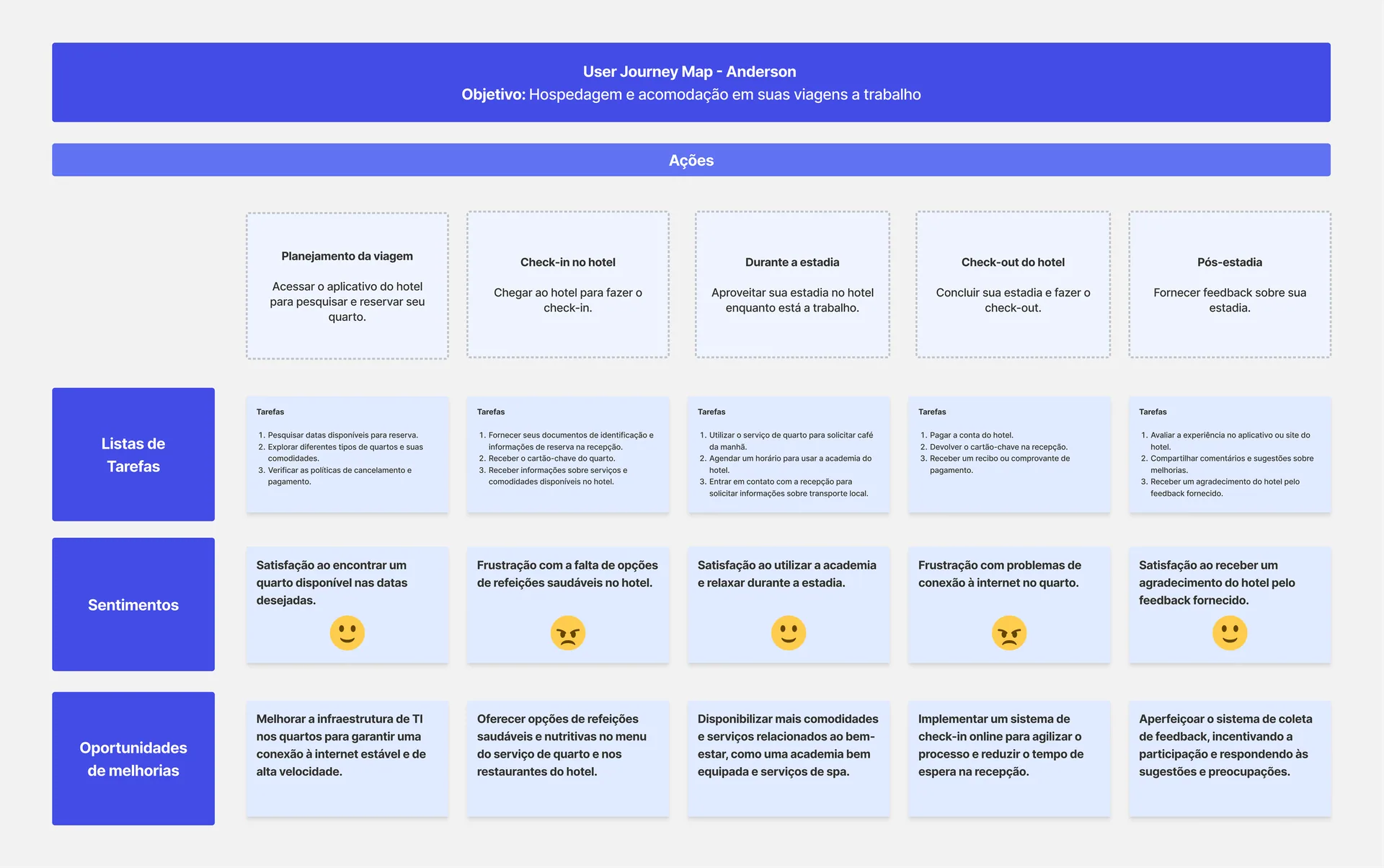
Based on the data, a user journey was created for Anderson.
Ideation
Competitive audit
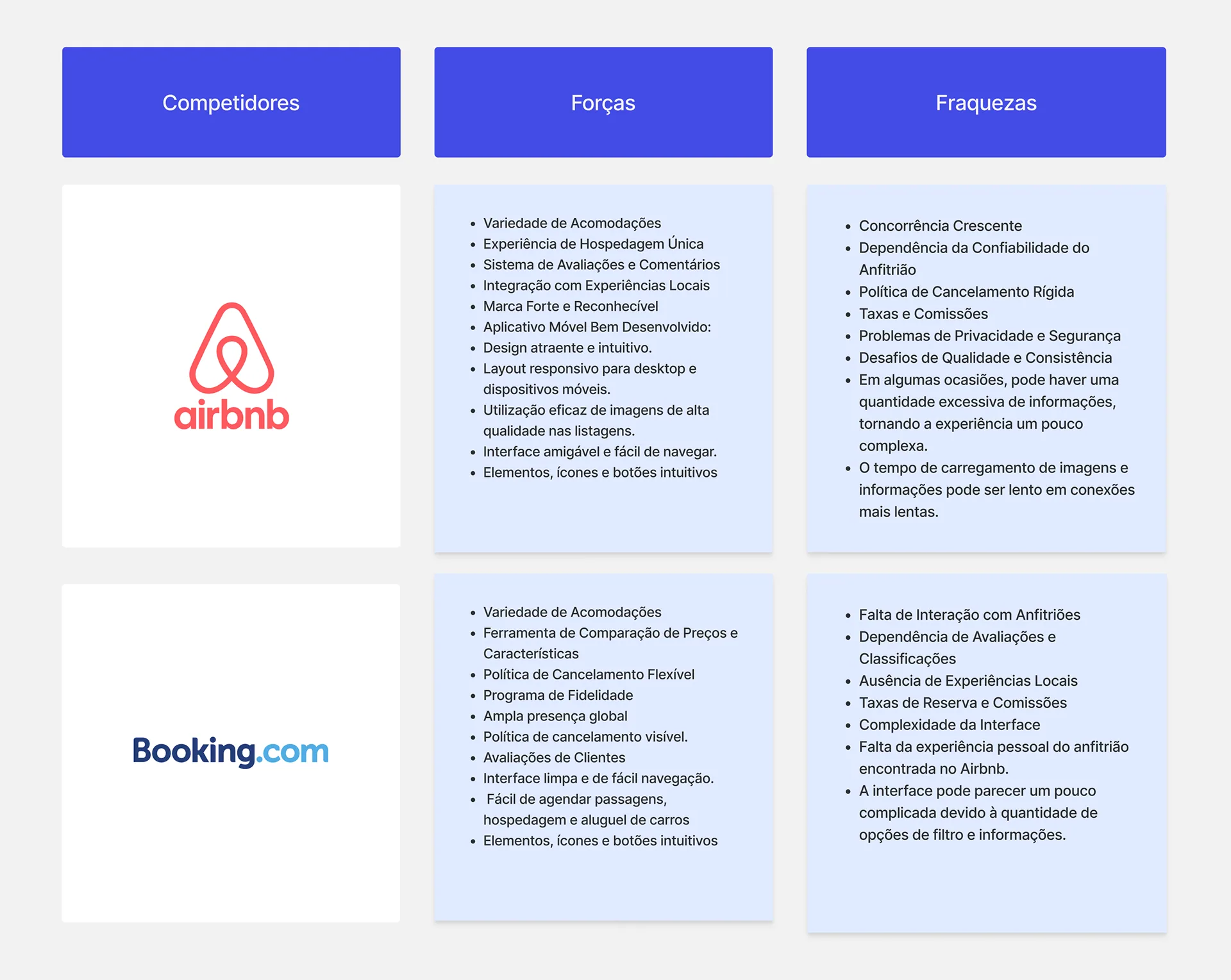
I mapped both the direct and indirect competitors currently in the market and analysed their positioning strategies, strengths and areas for improvement. I began by reviewing app store ratings, which gave me insights from users' praise and complaints. From that picture, I identified the opportunities and gaps my product could address effectively.
TravelSuite's direct competitor is Airbnb, which offers travellers an authentic, personalised and unique stay. Unlike traditional hotels, Airbnb lets people rent accommodation directly from local hosts around the world. Its main advantage is the diversity of options: travellers can choose from apartments, houses, private rooms, cabins, boats and even castles, so they can find a place that fits their needs, preferences and budget.
The less direct competitor is Booking.com, which also offers a wide variety of accommodation worldwide, making it simple and efficient to book hotels and other types of lodging. It also offers other services that may or may not be part of a trip, such as flights and car rentals.
User flow
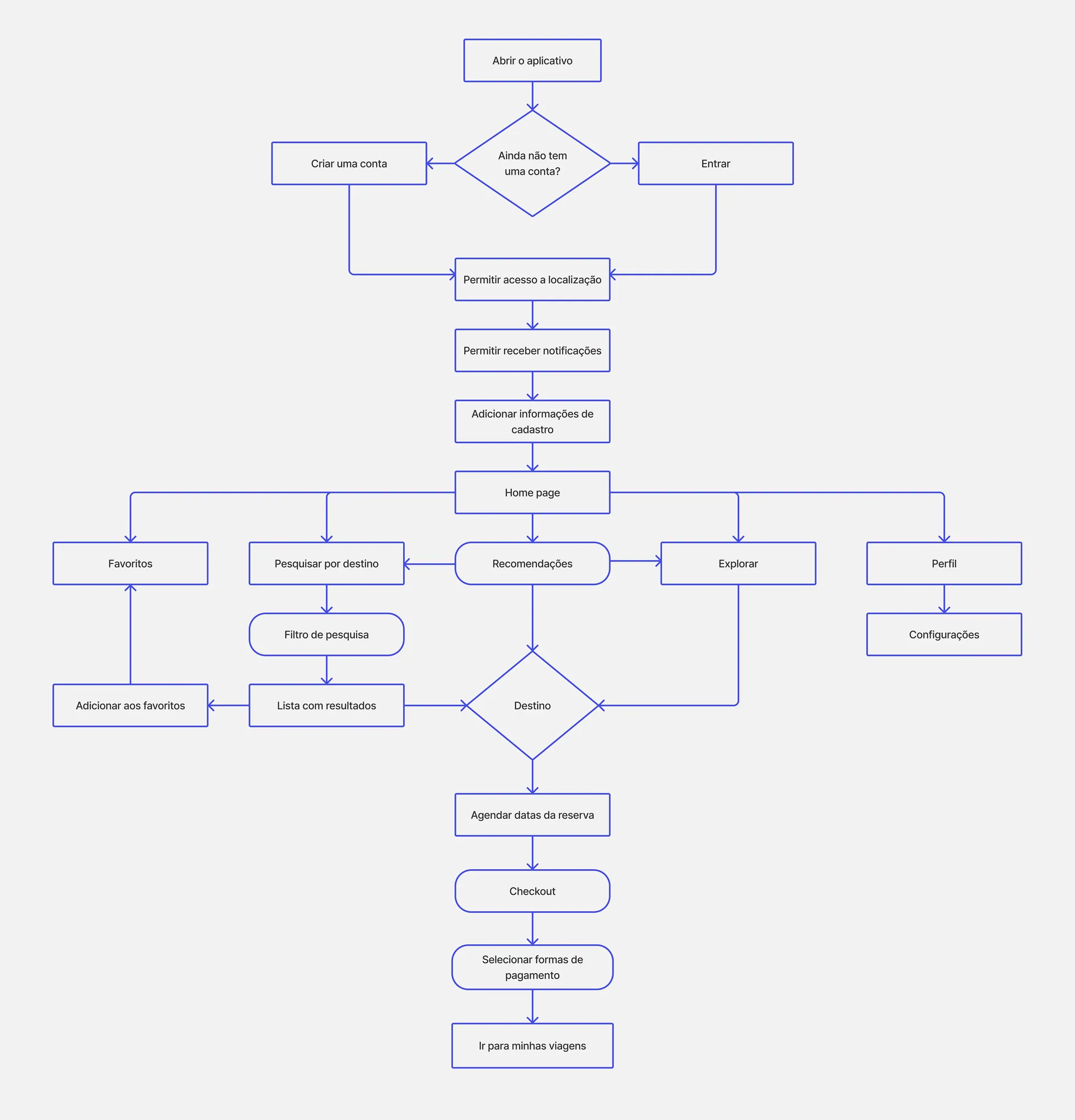
Next, I mapped a flow to identify the path users would follow when using the product. This helped me pinpoint the actions and choices they would make to reach their goals.
Prototype
Wireframes and low-fidelity prototypes
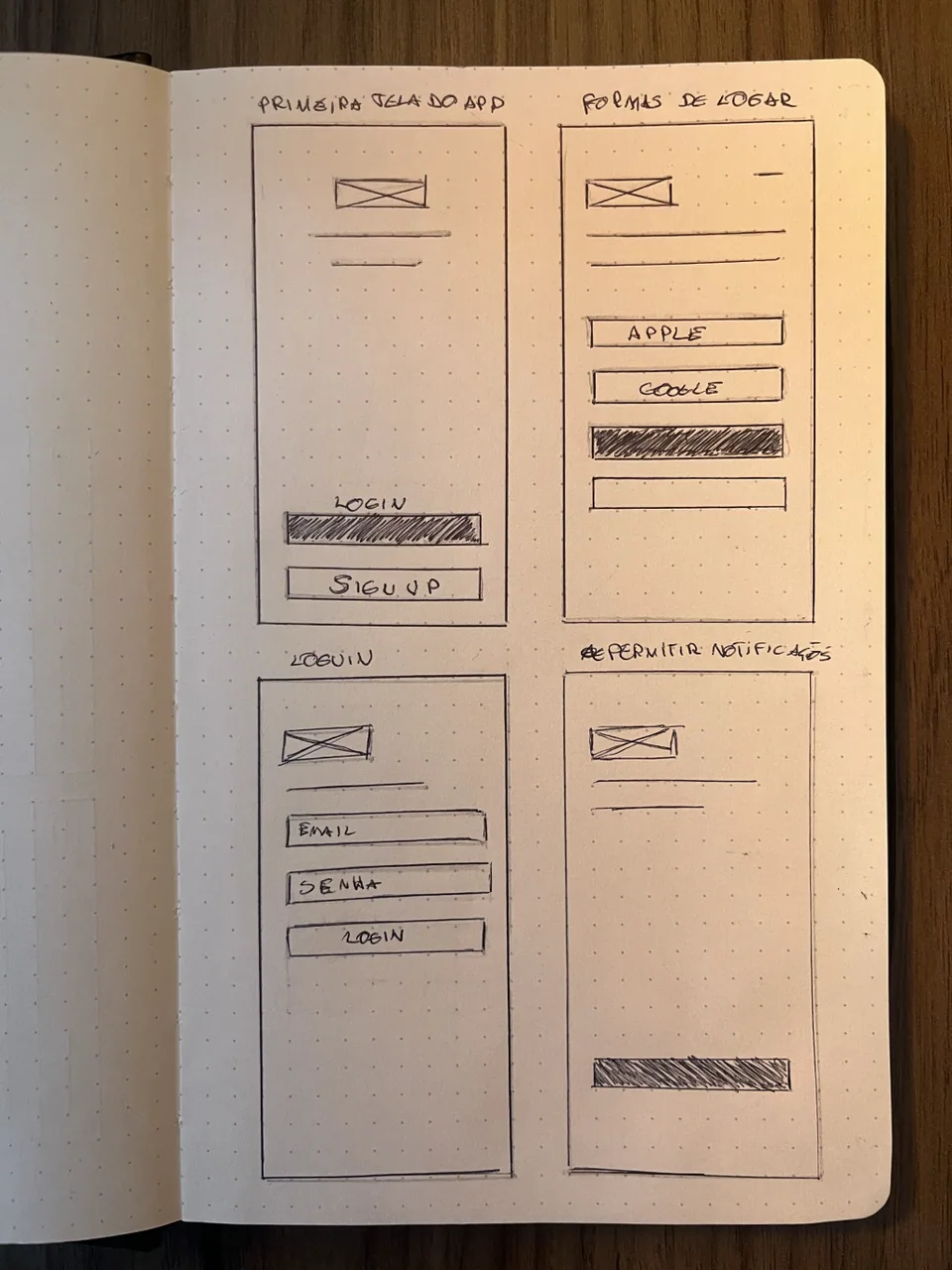
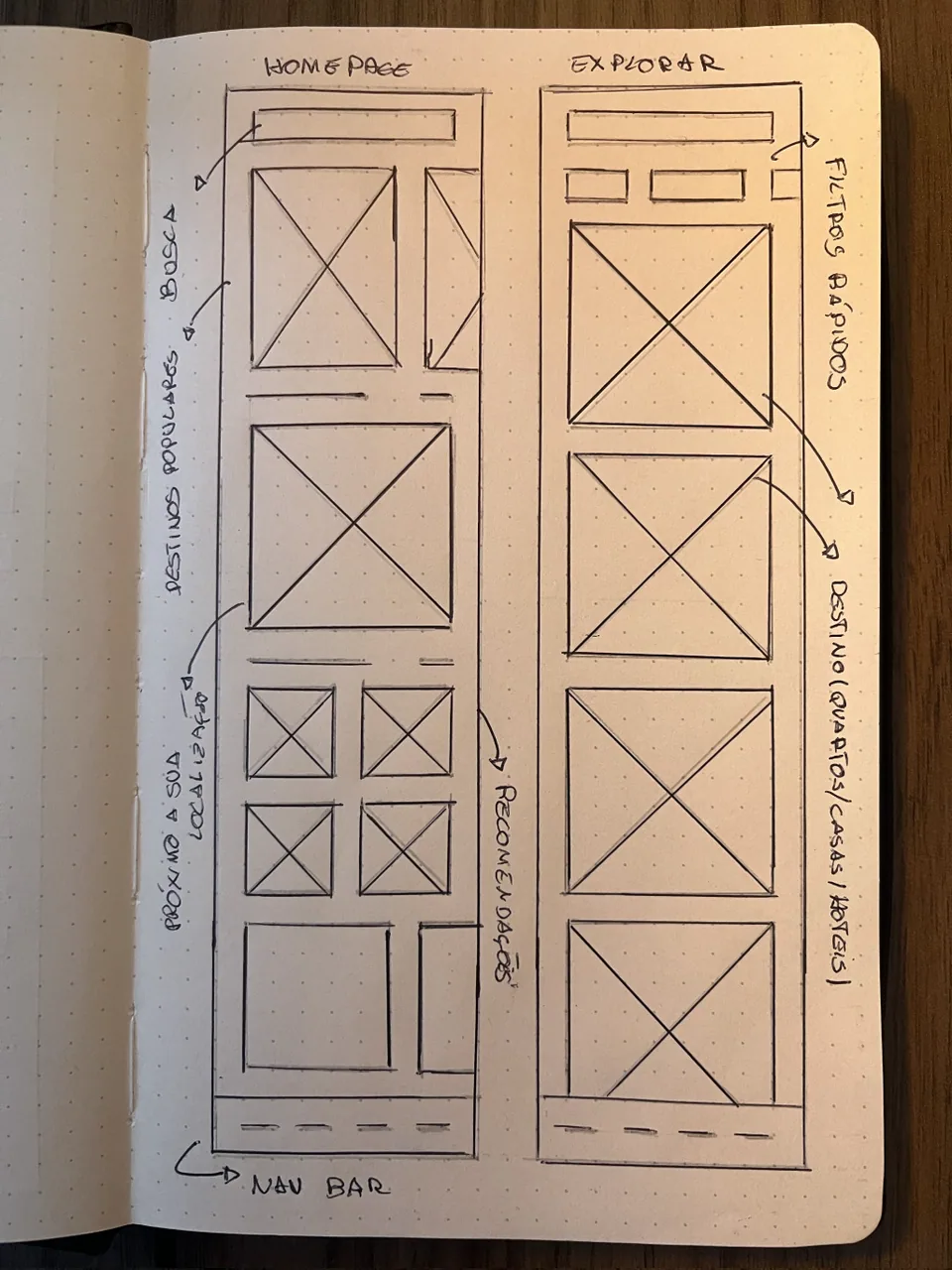
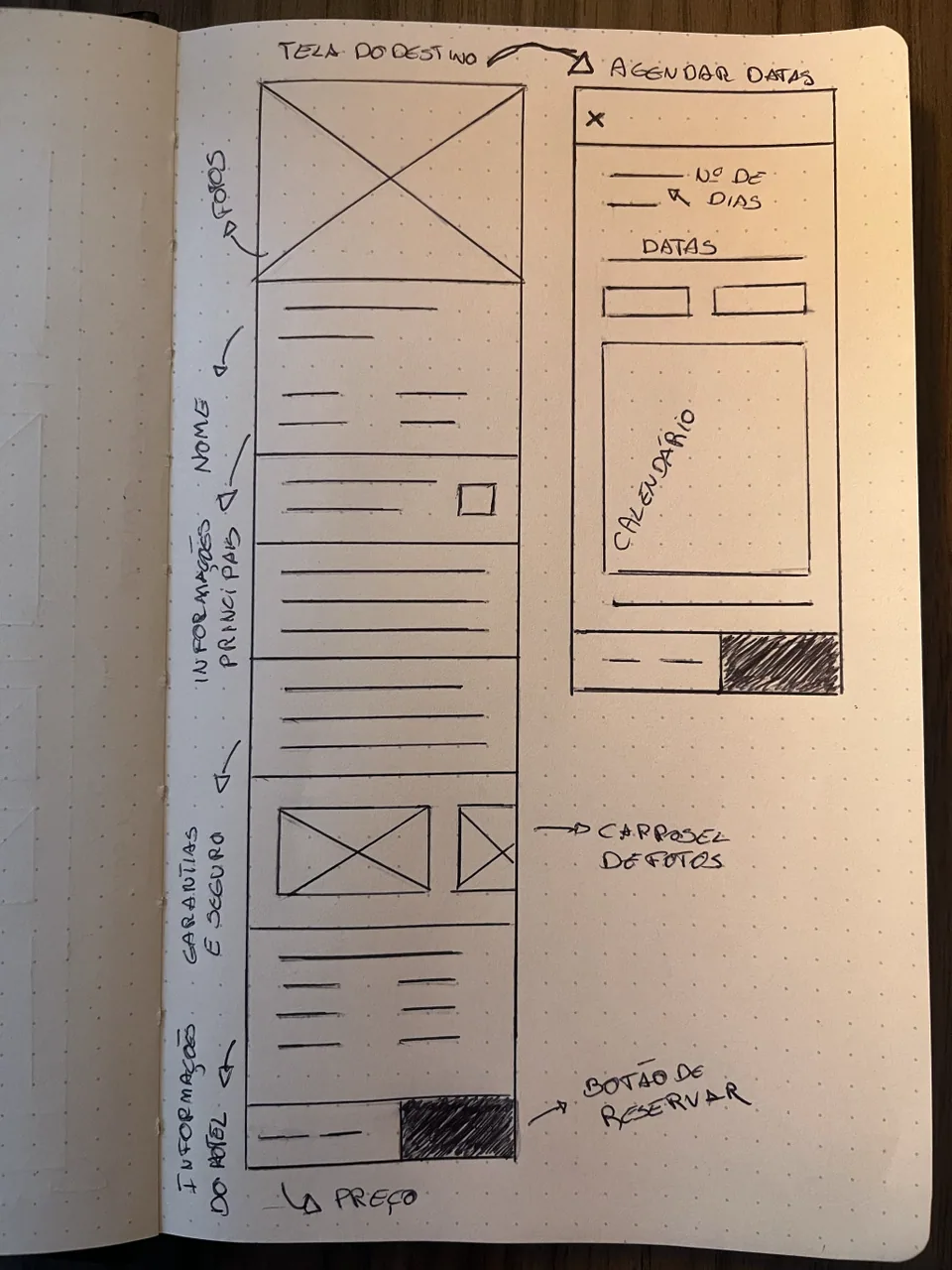
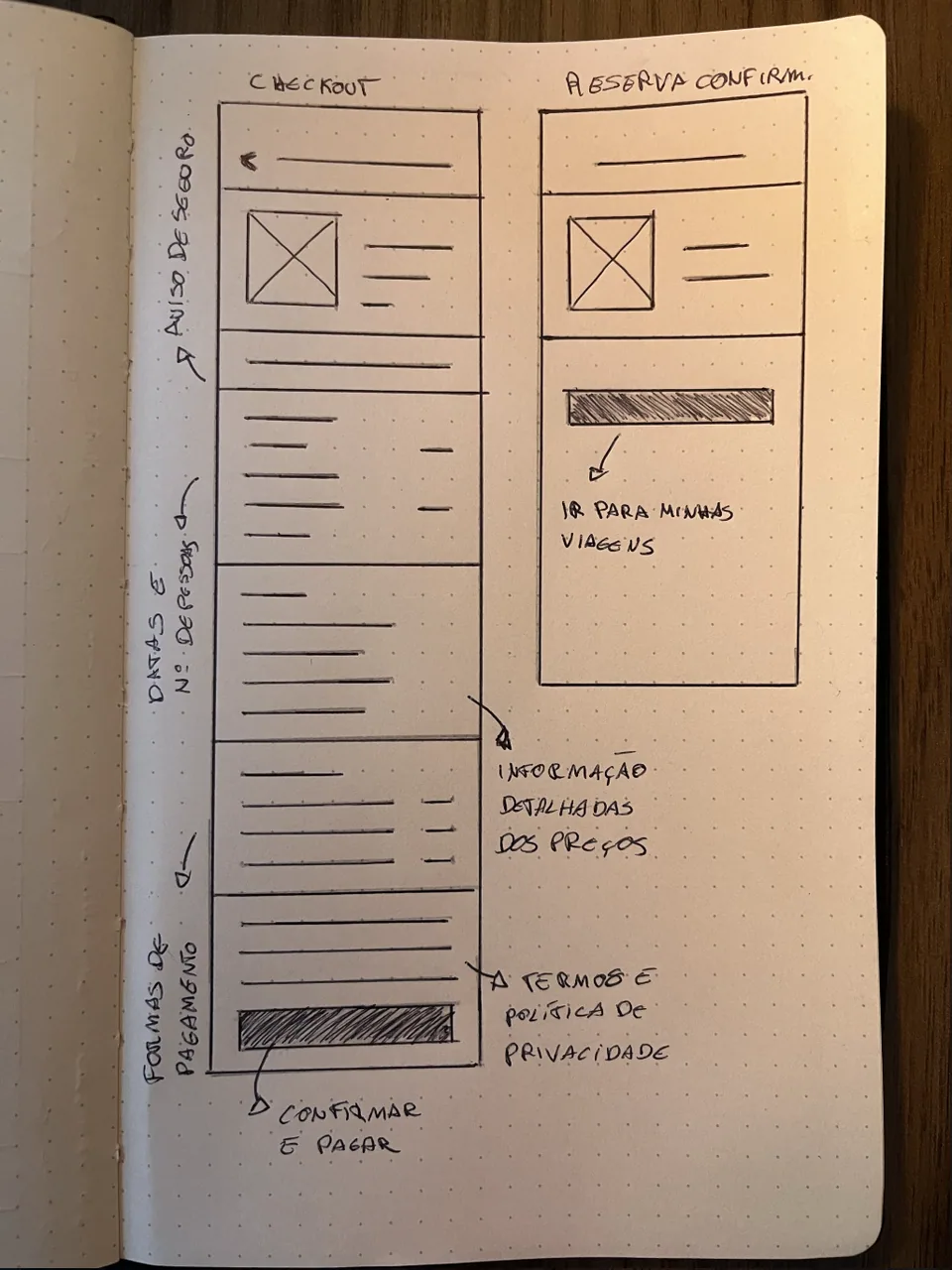
I made some quick hand-drawn sketches on paper to conceive the structure of each screen, from login and sign-up to the product's main screens. Many distinct ideas emerged, which in turn allowed for fast iteration. My aim was to generate a large volume of ideas for how the screens could look, without going deep into brand, colours or typography.